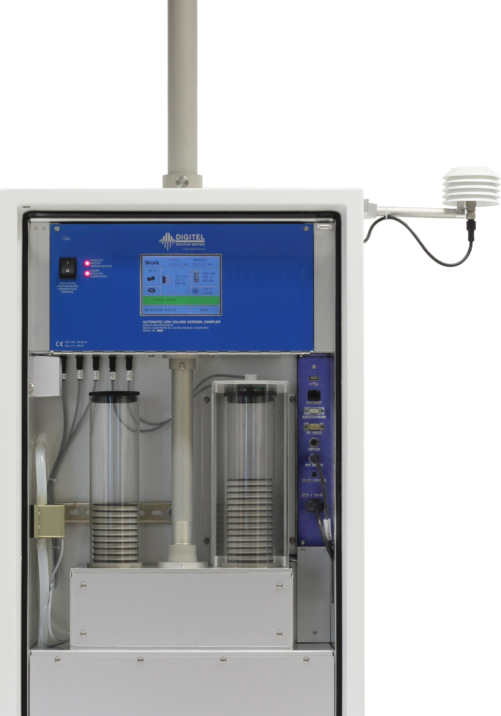
DPA-14 Low Volume Sampler with PM10 Inlet at 2250m ASL
Himalaya: ICE-CRUNCH – Indo-Swiss Research Project on INP and CCNP

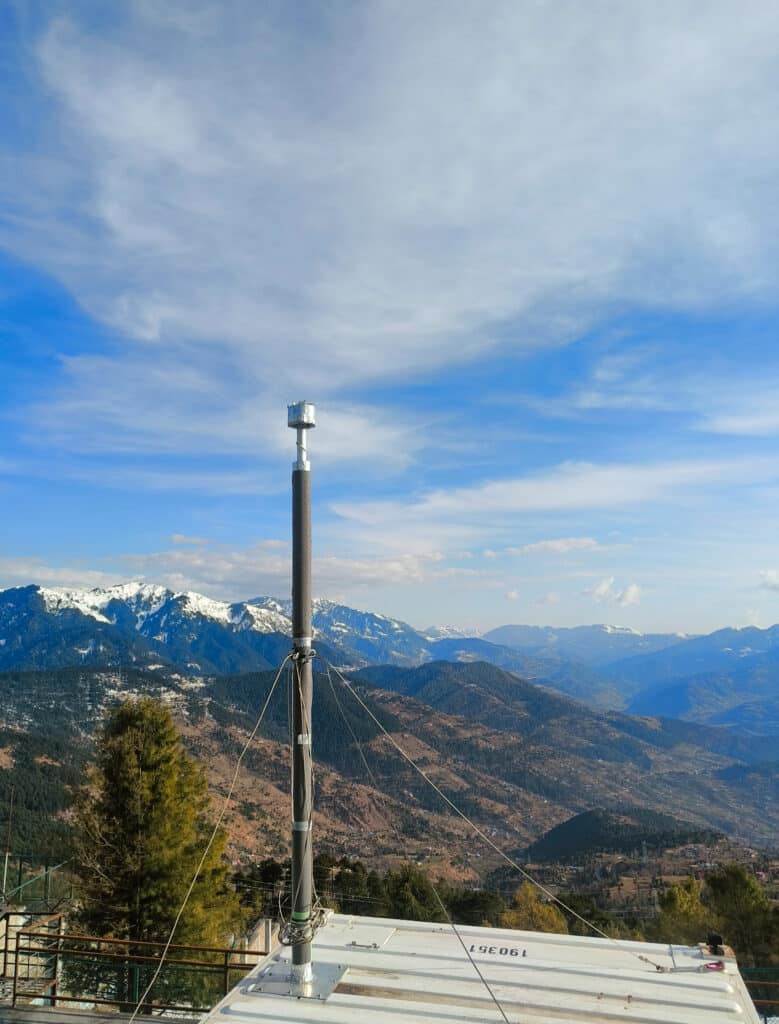
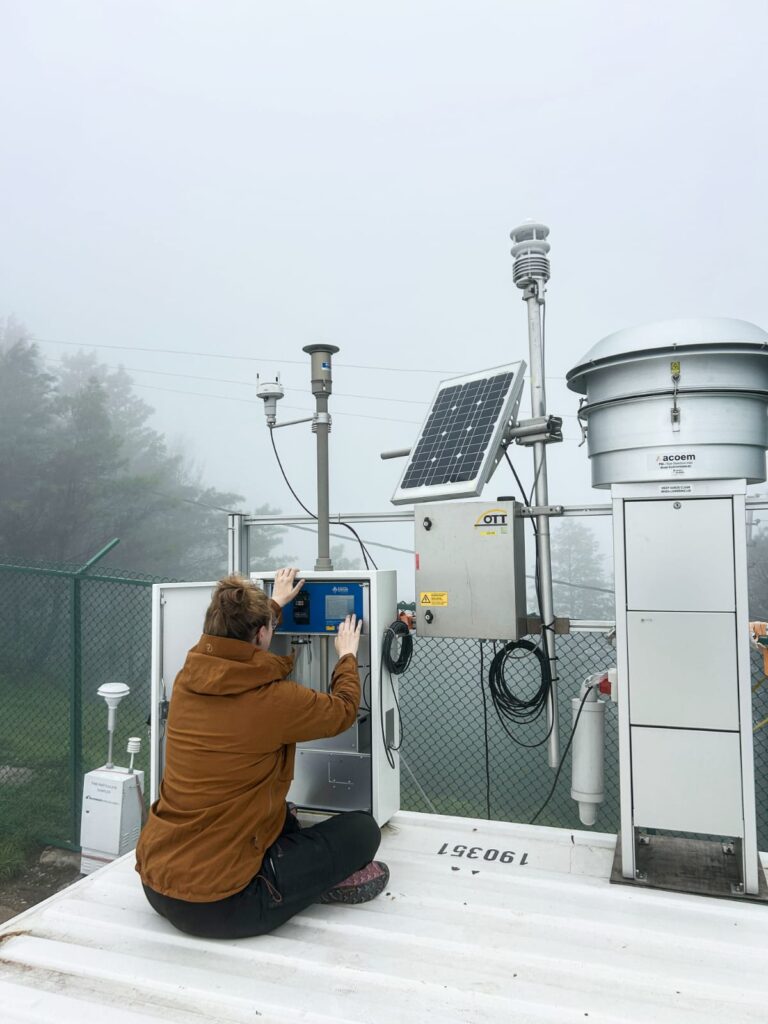
The North-Western Himalayan (NWH) region is climatically unique and serves as a major freshwater source, making it vital to the surrounding areas. However, limited knowledge of aerosol properties restricts climate modelling and prediction accuracy for this region. Aerosols in this region vary seasonally, originating from biomass burning, vegetation, dust, marine transport, and human activities such as traffic and crop residue burning. Their role in cloud formation—especially ice nucleation—remains unclear. Identifying ice nucleating particles (INPs), their concentrations, and properties is crucial to distinguish natural and anthropogenic influences. Using a low-volume Digitel DPA-14 PM10 sampler at a high-altitude site, we collected seasonal aerosol samples to further analyze their ice nucleation ability and chemical composition, aiming to quantify biological and organic contributions and better understand seasonal variability.
Key Facts
| Scope | Quantification of biological and organic ice nucleation particles on high altitude |
| Region | Asia |
| Location | Nathatop, Jammu & Kashmir (North-Western Himalayan region) |
| Period | April 2025 to February 2026 |
| Operator | ETH Zürich and Himalayan High Altitude Atmospheric and Climate Research Centre, Central University of Jammu |
| Type of Project | Research |
| Local Partner |